So many questions from the newbeek

18 May

More for my own reference than anything else, here’s a brain dump of questions I have 3 weeks into beekeeping:

  • For the summer, should we remove the bottom board leaving only a screened bottom?
  • Do drones buzz louder than worker bees?
  • Is it possible that workers built a supercedure cell but didn’t move an egg into it?
  • Do bees like cacti? They’re not on most lists of bee-friendly garden plants, but in the Southwest we’ve plenty.

If any of you bee sages out there have answers, I’m all ears.

Queen Natasha, the haughty princess lives on

17 May

I was about to quit and take up worm farming along with this guy, when suddenly in our inspection today, we spotted Queen Natasha happy on the comb. Actually, Aleksander spotted her and was giddy as an emo at the release of a new Harry Potter flick.

Why the drama?

Upon opening the hive last week, we spotted 2 supercedure cells and no sign of Queen Natasha, our new Allstar queen from B. Weaver. Not a promising vision for a newbeek such as myself. Much hand-wringing and frantic emails to TJ ensued.

Fortunately, things are back on track.

Upon the advice of my bee mentor TJ, we did leave the supercedure cells intact. The idea being that a hardy queen will terminate the upstarts or be terminated herself by a stronger queen.

My money’s on the haughty and virile Queen Natasha.

Bee video goodness live from Albuquerque

13 May

For your edification and delight, here’s some titillating footage of our bee package installation. It’s a kenyan top bar classic sure to amaze friends and family.

Queenless?

11 May

One week after installing a new package, we opened up our hive and found:

  • tons of honey
  • 2 new combs
  • some larvae
  • no queen
  • no new brood
  • 2 supercedure cells

Methinks the queen has disappeared. We didn’t remove the supercedure cells thinking that maybe the workers are trying to raise a new one but at the end of the day we’re utter newbies. Clueless.

I’ve got an email into TJ for advice. In the meantime, the only consolation is that I tasted my first homegrown honey today and it was divine.

Continue reading

44% of all U.S. bees died last winter

5 May

44% of all the U.S. bees died last winter. Again, doing the math, that comes to 1.1 million colonies, just shy of what’s needed for almond pollination next spring. Hmmmm….
from ‘Colony Collapse Disorder: What We’ve Learned’

In the article above, Kim Flottum, editor of Bee Culture magazine, seems to conclude Israeli Acute Paralysis Virus (IAPV) has something to do with it.

Freeing the queen

5 May

Yesterday evening, I checked on the queen.

Activity around the hive had settled into a normal pattern, but I wanted to make sure she’d been freed from her cage properly. At sunset, A. and I opened the hive (my first opening without the patient oversight of TJ) to find that she was nearly freed but not quite. We smoked off her attendants and peeled back the mesh.

Queen Natasha (as I’ve just now decided to call her) skittered down into the hive without a moment’s hesitation. There was plenty of nectar already filling the comb and Natasha’s crew were busy and docile.

So far so good.

Bee Lessons: Worker Brood

4 May

Here’s another lesson from the Albuquerque bee man, TJ, and his rooftop hives.

How to identify worker brood

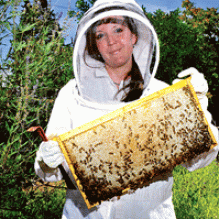
Comb filled with tight even worker brood like this is pure eye candy for the beekeeper opening her hives in Spring. Lots of worker brood means a strong workforce able to harvest spring nectar.

At my place in the city of Albuquerque, the girls will find nectar from a variety of trees such as apricot, elm, honey locust, and a variety of other flowering fruit trees maintained by urban gardeners. Thought, this year, my girls arrived late (I just received my package a couple of days ago) TJ’s bees have been hard at work for over a month. In fact, when I snapped the photo shown above, his girls were already bringing in honey and the gray pollen characteristic of elm trees. It’s the start of a rockin’ year for the hive.

It’s bee day

2 May

I started my first urban beehive today with the help of a nucleus colony ordered from Texas and the advice of local bee sage, TJ.

Here’s the story.

Continue reading

Hive a waitin’

2 May

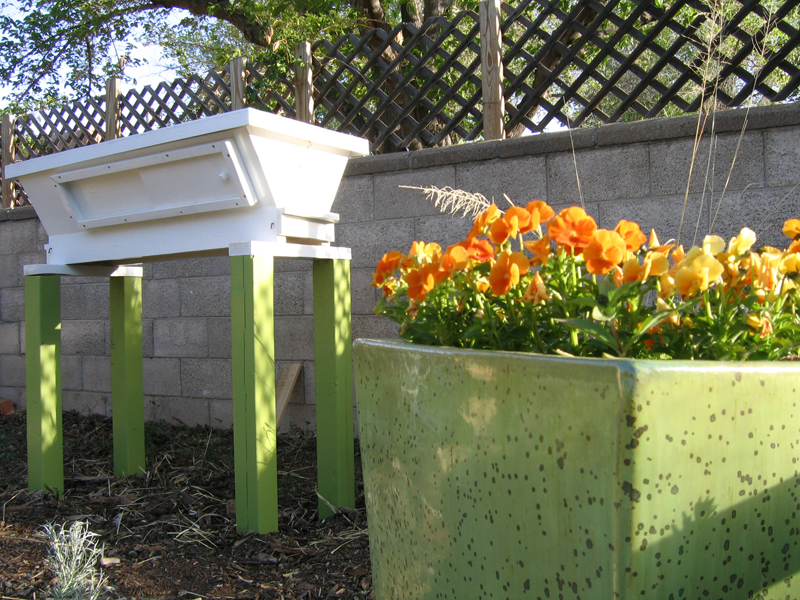
Like a lady in waiting, here’s my hive. Tomorrow its occupants arrive, all 10,000 of ’em. I’m so juiced, I can barely sleep.New top bar hive

Bee Lessons: Drone Brood

25 Apr

Up on old man TJ’s roof where he keeps three hives in Albuquerque, I began my education.

This here’s a keen picture (TJ frequently peppers his speech with the word “keen”) illustrating the difference between brood and honey. How to identify drone brood

Drone brood pops up out the comb to accommodate the larger size of drone larvae. Later this week, I’ll post an annotated photo of worker brood so that you can see the difference.

Drone brood is fine. You want some drone brood in your hive, but too much and you won’t have enough workers to gather honey and maintain the hive. Too much drone brood might also be a sign that your queen is failing.