5 things I learned from Jürgen Tautz’s “Buzz About Bees”

18 Aug

It’s a book that will change your perspective about honeybees.

Though the American title, “Buzz About Bees” seems flippantly trendy, Jürgen Tautz’s book is loaded with data-backed analysis of bee behavior and insight into the latest genetic research. It’ll make you think differently too about the aggregate behavior of another social species, Homo sapiens.

Buzz About Bees: The Biology of a Super Organism

5 Things I Learned

The hardcover book is lushly illustrated and packed with mind-blowing information to fuel a beekeeper’s endless thirst for understanding. Here are just a few of my favorite revelations.

1. Bees don’t form hexagonal comb.

Wax, like glass, is a liquid. Once the bees build comb, they melt it slightly and that’s how it naturally forms hexagons much like adjoining soap bubbles do.

2. Bees turn off color vision on the way back home.

Bees use color vision selectively, turning it off to conserve energy when it’s superfluous. Who needs color on the way home, for example? Though they view objects in color when flying out to forage, they switch to B&W for the rote journey home.

3. Bees can sting each other without dying.

Apparently, it’s mammalian skin that thwarts the honeybee stinger. Honeybees die after stinging a human because their barbed stinger can’t be extracted easily but honeybees can sting each other as well as other insects without such dire consequences.

4. The honeybee waggle dance is NOT about visuals.

It’s about vibration. When honeybees dance, they’re actually sending vibrational communication through the medium of the comb. In fact, the front face of honeycomb is thickened slightly to enhance the network’s transmission capacity.

5. “Mass-orienting” flights are really practice mating flights.

Those gorgeous afternoon displays are not actually bumbling baby bees learning how to fly. Rather, they are apparently an ongoing drill of  the workers that would accompany a virgin queen on her mating flight. Interestingly, these mass-orientations only occur in hives with a queen.

Check it out for yourself: Buzz About Bees: The Biology of a Superorganism

The Bee Killer

9 Aug

Like a super-powered sniper, Mallophora fautrix fixates on my Russian sage in full bloom. She waits patiently, not for the nectar, but for my honeybees that farm like a thousand seasonal workers, bobbing up and down in the purple blooms oblivious to the fact that they’re being watched. Grateful for the monsoon season’s bounty.

Unexpectedly, the bee killer swoops in like a hawk and snatches a bee mid-air!

IMG_4107-1

Whether the bee is dispatched mercifully, I don’t know, but Mallophora fautrix soon settles in the crook of a nearby vine to suck the honeybee’s fluids like a warm mango lassi on a blazing summer day. She luxuriates, wickedly sipping for nearly an hour on her prey. And then drops the carcass to the ground before resuming her ominous vigil.

Welcome Local iQ readers!

5 Aug

Thanks for reading the beekeeping article in this week’s Local iQ. Welcome to my personal beekeeping website.

Interested in Albuquerque beekeeping? Here are some resources:

Or, if you’re just looking for a website, here’s my consulting firm.

My glamour girls featured in Local iQ

5 Aug
Photo by Joy Godfrey

Photo by Joy Godfrey

Oh my! Me and the 40,000 vixens that call my backyard home are bashfully giddy about our feature in this week’s Local iQ. If it looks like we (me and the bees) are in love with each other, it’s because we are! Over the past 3 years, beekeeping has become one of the simple joys in my otherwise high-tech life.

“Bees are a reminder of our interdependence on one another,” Foster said in a recent interview. She elaborated that having bees in her life has changed the way she looks at nature. “I notice the rhythms now.”

Read the full article at Local iQ

Thanks to writer Kay Vinson and photographer Joy Godfrey for checking out my girls and learning more about Albuquerque’s amazing community of local beekeepers.

Honey Recipes: Pots de Crème with Lemon + Honey

29 Jul

With just 4 ingredients, Tartelette’s pots de crème recipe is a sublime way to highlight floral honeys like lavender or apricot. Whisk in a few egg yolks and cream et voila!

Minimalist decadence.

I happen to have a stash of floral spring honey from my Albuquerque neighborhood and will conduct rigorous recipe testing this weekend. With solely your well-being in mind, of course.

Honey Lemon Pots De Crème

Serves 6

1 1/2 cups (375ml) heavy cream
6 large egg yolks
1/3 cup honey
zest and juice of 2-3 lemons (you’ll need 1/4 cup or 60ml of juice)
pinch of salt

Preheat oven to 325Fº and position a rack in the center. Place your ramekins in a heavy deep pan and set aside.

In a medium saucepan, bring the heavy cream to a simmer. Turn the heat off but keep the cream warm.
In a large bowl, whisk together the egg yolks and honey for a couple of minutes. Add the lemon juice and salt and whisk until smooth. Slowly pour the heavy cream over the egg yolk mixture, whisking well. Let stand for a couple of minutes to let any foam rise to the top, skim it off and divide the mixture among your ramekins. Pour hot water inside the pan, making sure the water comes at least halfway up the sides of your dishes. Bake for 20 to 30 minutes.

Recipe from Tartelette

Everything Guide to Urban Honey

13 Jul

Local chef and co-owner of Jennifer James 101 (they use our honey at the restaurant!) dropped off this sumptuous article on urban beekeeping yesterday: The Everything Guide to Urban Honey.

Informative and artistic, it’s a convincing testimony that urban beekeeping is back and here to stay.

From the series:

Are bees dangerous to Albuquerque?

7 Jul

Psst… got bees swarming on your property? Report a bee swarm in Albuquerque.

Scarlett the bee dog

"Bee dog" photo by Erik Abderhalden | Find more adorable dogs in bee costumes at http://www.beedogs.com

———————————-

Asking whether bees are dangerous is like asking whether dogs are dangerous when the reality is this: Dogs bite.

In fact, in the U.S. 1000 people every day seek emergency treatment for dog bites. And the cost of managing canines is a significant burden on a community.

Even in Albuquerque, one of the top 3 calls to the City’s 311 line relates to reporting, complaining, or otherwise managing our urban dog population. (I used to manage the City website, that’s how I know ;-)) The unfortunate truth is our furry best friends can be a big fat headache. But we love them, and some might argue need them.

So too with honeybees, another species long domesticated by humans and one we’ve come to depend upon. The benefits of bees to a community, a recent article in the NY Times (via Sweet Hive Chicago) discusses, far outweigh the risks.  Here’s why:

  • Free pollination by bees supports our entire agricultural system (In NM, you can’t even ask the state question “Red or Green?” without the help of a honeybee.)
  • Local honey may help with allergies
  • Urban honey has less chemicals than rural honey
  • Bees act as an indicator of overall health (Did you know they use bees to test air quality at German airports?)

[Read the full article]

So hug a honeybee, compadres. And if you’re allergic, stay away from wasps which tend to be responsible for most “bee attacks” in the populated areas we call home, sweet, home.

Making Mead: A Photo Essay

4 Jul

I’ve never brewed anything successfully. The kombucha I attempted to brew in a jar on my countertop grew nothing but mold despite my urban hippie aspirations.

But here I am trying again with mead only this time with some major tutelage. Elliot’s the brewmaster here and I’m just a helping hand who happens to have copious amounts of honey to spare.

The Urban Meadery The Urban Meadery

We made a standard mead using champagne yeast and 1 gallon of honey for a 5 gallon batch. The local brew store recommended a few additions such as irish moss for clarity and a wee bit of tannin for balance. Continue reading

Bosque fire licks my beehive!

2 Jul

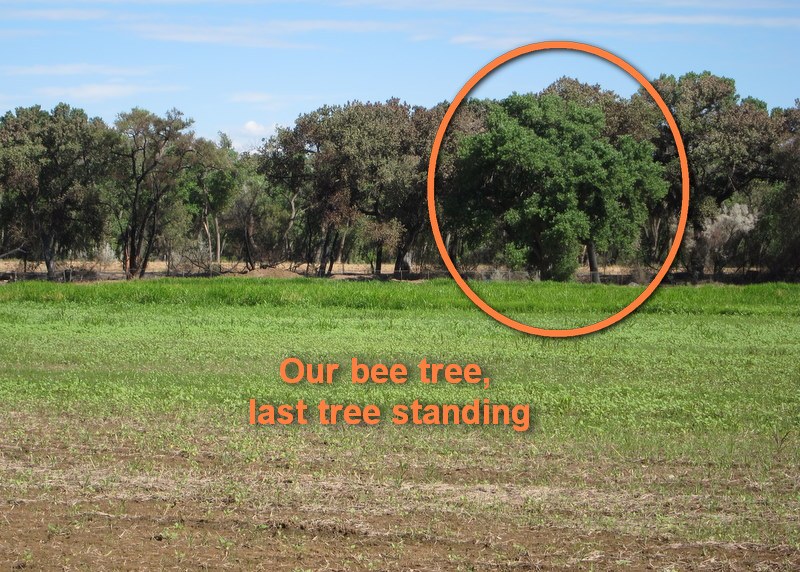
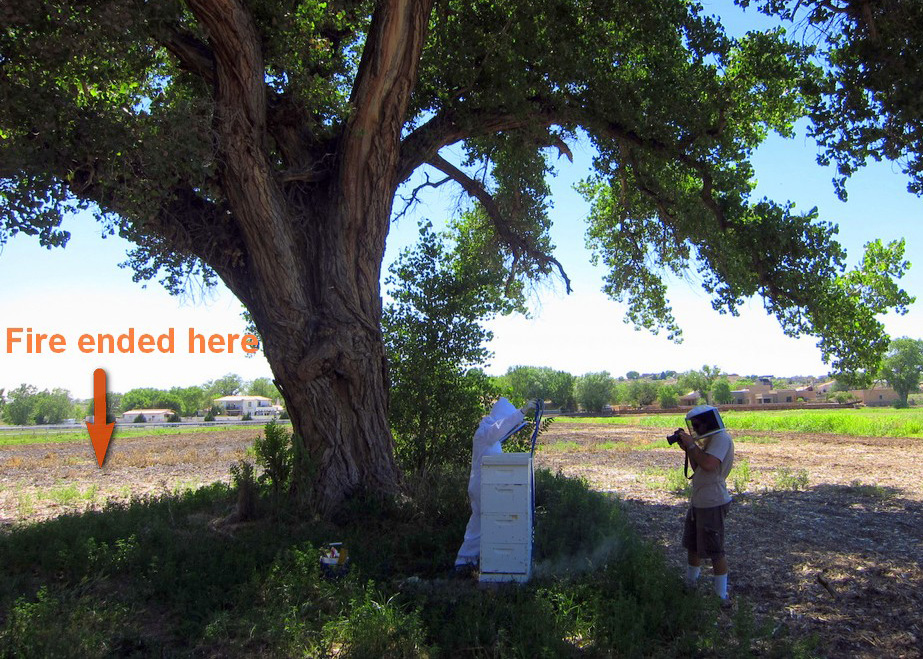
Fire licked so close this week to the beehive we manage for City Open Space that leaves on the cottonwood tree above were singed. Ouch!

It was a 5 acre fire that torched a chunk of the riverfront forest (that’s “bosque” if you’re from New Mexico) burning down the entire field of trees next to the beehive and starting a grassfire  just yards away. Driving up to the hive, once the area was open to access again, we had no idea what to expect — did the bees abscond? Did honeycomb just melt off its foundation?

Surprisingly, the girls were buzzing along seemingly oblivious to the smoldering forest and the hive itself was filled with combs of honey and worker brood. We sampled a buttery chunk of honey, half expecting it to taste like smoke but it was pure and warm and… to its proud keepers, perfect.

We packed up our gear soothed by this amazing survivor hive. And I swear, as we pulled away, the bees were bearding in the shape of the Virgin, like any other modern day miracle,

Honey Tasting Party at Home

24 Jun


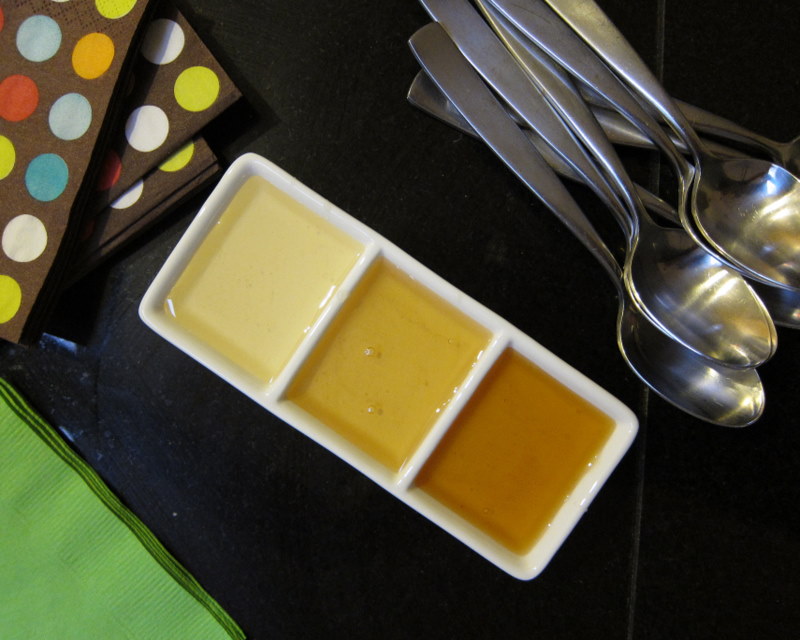
After mountain biking, a few friends stopped over tonight for a honey tasting in celebration of National Pollinator Week. It was a motley affair filled with sweat, spice, and of course, honey.

The Menu

  • Cambozola with golden spring honey and cranberry pecan bread
  • Strawberries dipped in honey
  • Red Chile Honey Glazed Bacon
  • Honey Chipotle Grilled Chicken Thighs
  • Corn Quinoa with Mesquite Honey
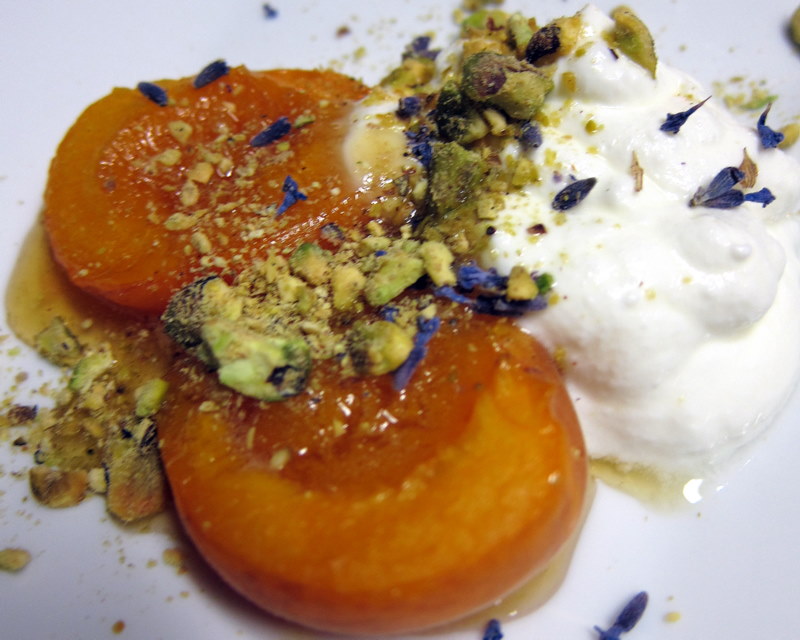
  • Honey Roasted Apricots with Greek Yogurt, Pistachios and Lavender Blossoms (from Seasonal Fruit Desserts)