The Secret World of Beekeepers

13 Oct

Once a month, the initiates gather. From all corners of the ancient Rio Grande valley, we come like seekers on the clandestine path. Once a month, we enter the hallowed chambers…

In other words, here’s what goes down at beekeeping meetings throughout the year for Albuquerque beeks.

October 2011 ABQ Beekeepers meeting October 2011 ABQ Beekeepers meeting October 2011 ABQ Beekeepers meeting
2011 Spring Field Day Continue reading

The Pollen Files: Chamisa

10 Oct

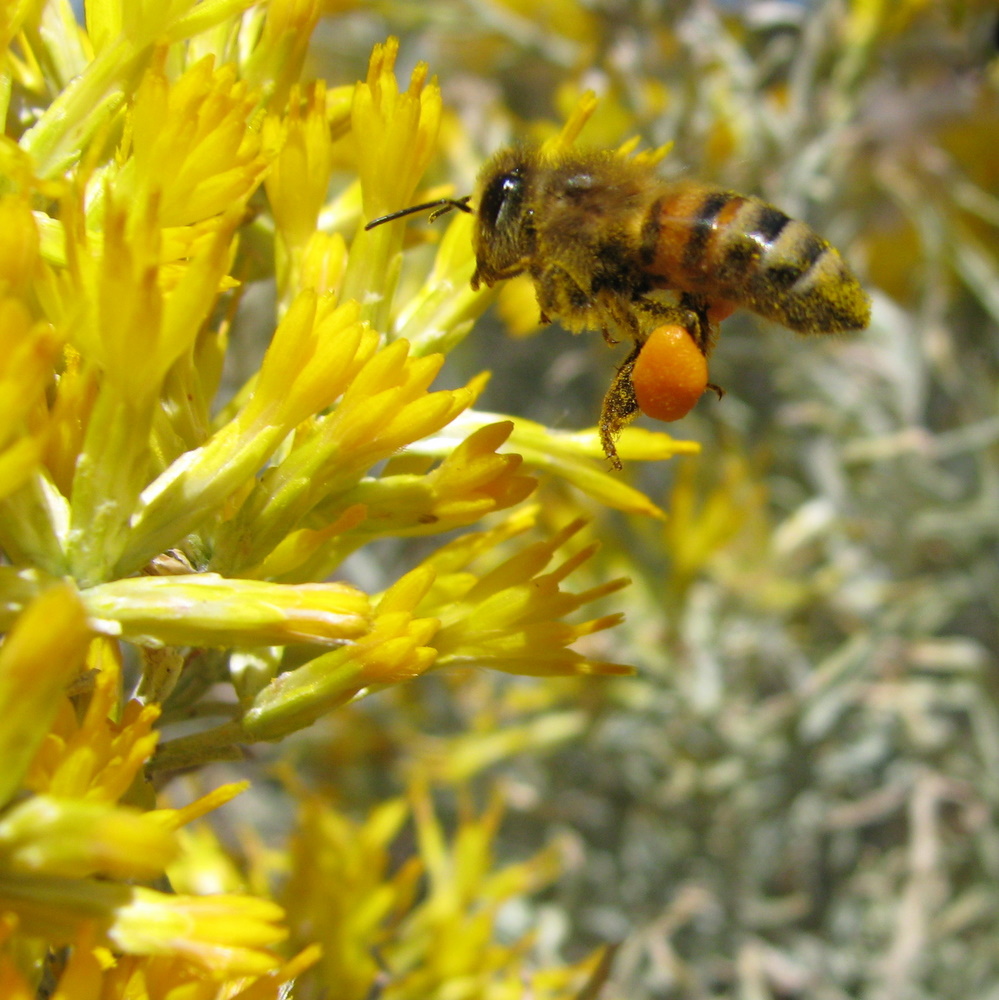
Though lacking a certain pizzazz, a certain, ahem…. radioactivity found elsewhere in New Mexican chamisa, our backyard shrubs bloom gloriously each fall and right when our beehives need the protein for winter. As we speak, the lurid market is open for business.

Chamisa (Ericameria nauseosa) may smell like a wet armpit and cause allergies to flare, but it’s xeric and reliable and a tasty high-protein sunburst for both native and European bees.

Pollen baskets full from the chamisa market

Honey Recipes: Fig Honey Jam with Bay

12 Sep

Each autumn when figs ripen and the honey jar starts to fill, I crack open my copy of a frou-frou cookbook by the woman known in France as the Fairy Godmother of Jam, Christine Ferber, and turn to p167.

There on p167 is a simple recipe for the most grown-up ambrosia your lips shall encounter — Fig and Honey Jam with Bay. I’m sure it’s divine with all sorts of bourgeois goodies like foie gras but I eat it straight out of the jar after a long sweaty day slinging websites.

Fig & Honey Jam with Bay

  • 2 1/4 lbs figs
  • 3  1/4 cups sugar
  • 3 1/2 oz honey (I like a darker summer honey.)
  • 6 bay leaves
  • Juice of 1 small lemon
If you’re lazy, just cook this all up slow and long on the stove. Then seal into jars.
Alternatively, you follow these more complex instructions including an option to add pectin, which I’ve never needed.

Utter Hive Destruction: Signs of a Dead Beehive

5 Sep

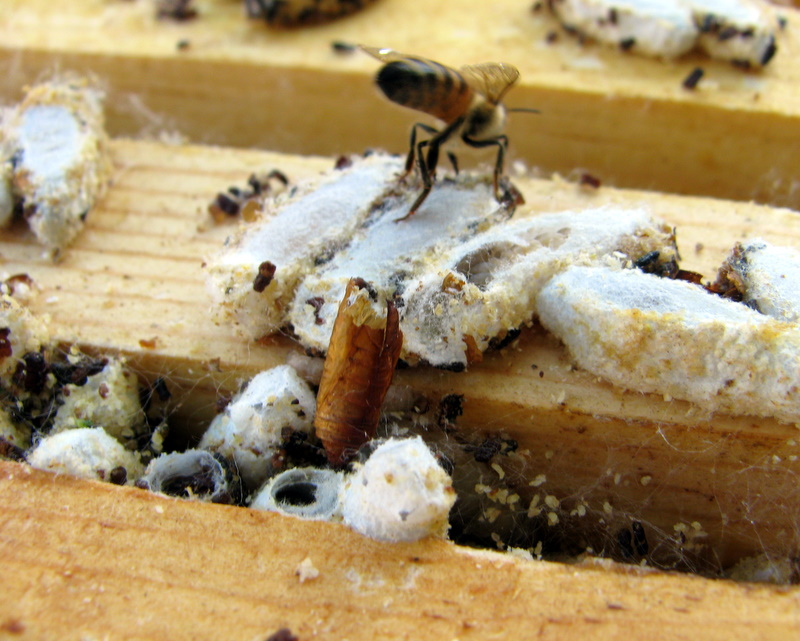
More gross than a thousand creepy ex-boyfriends is this: A wax moth-infested beehive.

Hive overtaken by wax moths

Two months ago, this hive was booming. But when it exuberantly swarmed in July during one of the hottest and driest summers on record in Albuquerque, we already knew the end of the story.

It goes a little something like this…

  1. First, the girls can’t/won’t/don’t raise a new queen.
  2. Next, their numbers dwindle.
  3. Then, the delicate balance of nature tips in favor of wax moths and ants and robber bees.

And thusly skin-crawling putrefaction occurs in the hive as moths build tunnels through wax comb and ants pilfer the remaining honey. It’s a race to the bottom and the few remaining worker bees struggle hopelessly like violinists on the sinking Titanic. They scurry and gather and clean but are destined for death.

Opening such a hive is a visceral endeavor for you’re not sure whether to cry or wretch. If it weren’t for a stiff drink afterwards, I’d probably do both.

A dirty landing board means the end is near.

Wax moth webbing shows they've moved in.

The few remaining bees can't keep up.

Wax moth larva crawl everywhere.

At this point, we’re focusing on our strong remaining hives and will let this one sadly languish until winter’s hard freeze. Both bees and moths will have perished then and we’ll clean and freeze for a fresh start next year.

And so the tale of this hive ends. Except that I happen to know there’s a little Lebowski on the way and that the early spring split from this hive is going strong, strong enough to survive the winter and promise new birth next year.

Entering the Hive of Doom

5 Sep

Today, I enter the infested realm, the web of neglect. Today, I open the hive of doom.

Neglect rules at the hive of doom

It’s the hive that swarmed massively and inexplicably in July like rioters late to the rave. We attempted to requeen but activity on the landing board remains dismal. By now, it’s surely failed and certainly overrun by wax moths and ants, opportunists feasting on the colony’s remains.

This afternoon, I’m donning the hazmat gear and going in… And I promise to take photos of the gory scene.

UPDATE: Gory indeed. Hold your breath and dive in!

Bees + Beekeeping in Sweden

11 Jul

What I imagined in Sweden were Ikea-designed hives filled with winged mini-Vikings quaffing Absolut vodka. The reality, however, is much like beekeeping in the U.S…. plus styrofoam.

Last month, I lived in Gothenburg, Sweden where I encountered obscene amounts of daylight, smoked fish, and craggy green nature. Surprisingly, however, I saw very few honey bees. But that’s a different story.

Let me introduce you to the bees I was lucky enough to meet in Sweden and one special hive we took a peek inside.

Bronze Age Carvings & Bees

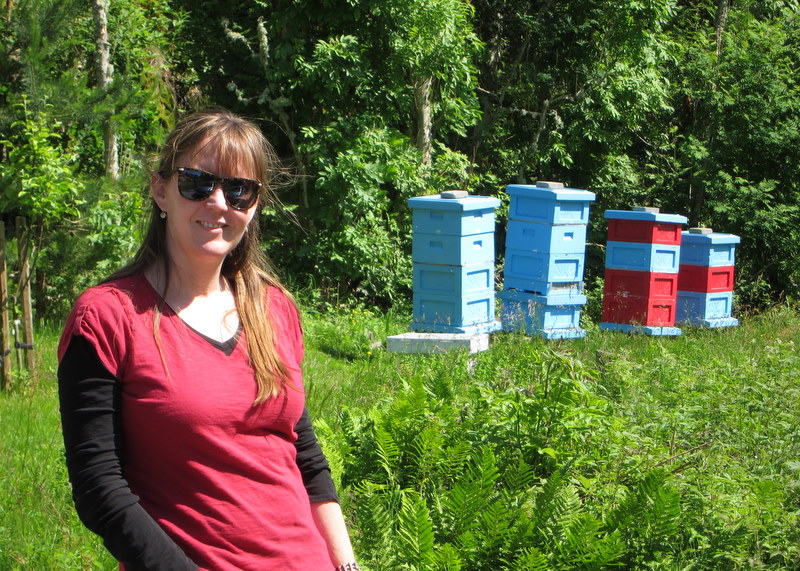
All watery green and granite, the Bohuslän coast north of Gothenburg is home to a series of Bronze Age rock carvings. It’s all part of a UNESCO world heritage site replete with hunting scenes and phallic might. On the road in between one ancient carving spot and another, we encountered this bright little apiary owned by the Johansson family.

Bronze Age rock carvings in Tanum

The Johansson hives

Continue reading

Team-Building Through Beekeeping at Sunset Magazine and Google

16 Jun

It’s bee blogger exchange week! Yesterday, I highlighted 3 Albuquerque beekeepers on the Sunset website and today we have Margaret Sloan from Sunset’s “Team Bee” returning the favor.  Margaret blogs about bees for Sunset Magazine’s One-Block Diet. When she’s not tending to Sunset’s 3 hives,  she also is a production coordinator, fact checker, and map maker for the magazine.

Sunset Magazine’s One-Block Diet didn’t start out to build a better work team. It started as a project to help our readers learn to produce their own food in whatever space they have available. Like many of our readers, we had to learn from the ground up to do urban-homesteady things such as make cheese, brew beer, and, yes, raise bees.

As it so happened, the One-Block Diet’s beekeeping project did have a team-building effect. Communication flowed more freely between departments as Team Bee members buzzed around, talking bees, honey, and yes, Sunset Magazine.

I wanted to know whether other companies who keep bees were having the same team-building experience that we‘ve had at Sunset. And what company is more trendy and in the news for its apiary than Google and the Hiveplex?
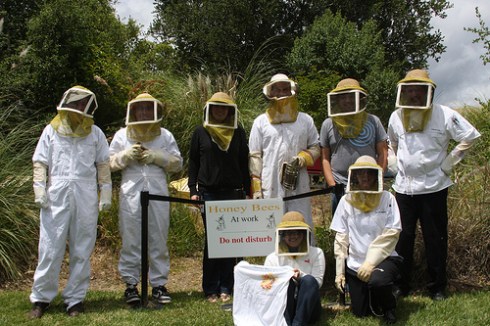
Members of the Google beekeeping team

I called Rob Peterson, software engineering manager and one of the many beekeepers at Google in Mountain View, CA, only about 20 miles from us at Sunset. In their park like campus-by-the-bay, 120 employees have signed up to tend 4 beehives, sharing the duties of hive inspections, honey extraction, and general bee stuff. Continue reading

What is the White Bee Disease?

22 May

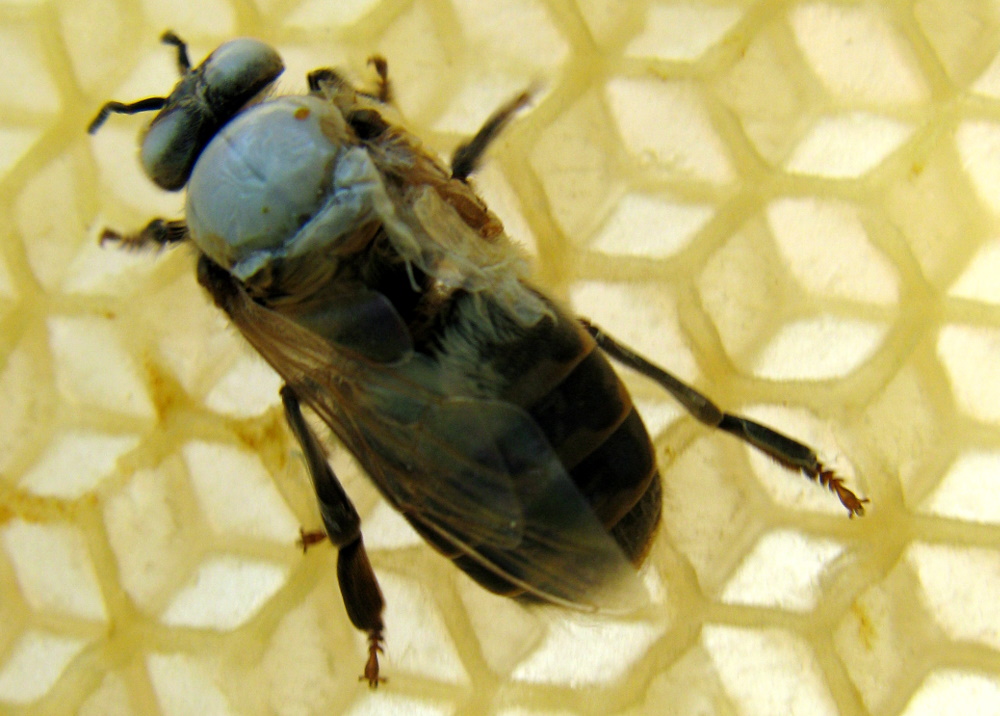
Like ghosts, a few drones such as this one limped eerily through our hive last week. It’s a hive hosted at City of Albuquerque Open Space near the Rio Grande and we suspect deformed wing virus transmitted by varroa but aren’t quite sure.

White Drone: Symptom of Deformed Wing Virus?

White Drone: Symptom of Deformed Wing Virus?

  • Yes, there’s a deformed wing.
  • Yes, we saw a few varroa on drones in the hives.
  • But I can’t find a description in our bee books of the “whitening” of live bees.
Can anyone offer further insight?

Attila the Hun of the Honeycomb

17 May

Witness the “Bee Song” by Zach Sherwin aka MC Mr. Napkins at The Aspen Rooftop Comedy Festival 2010.

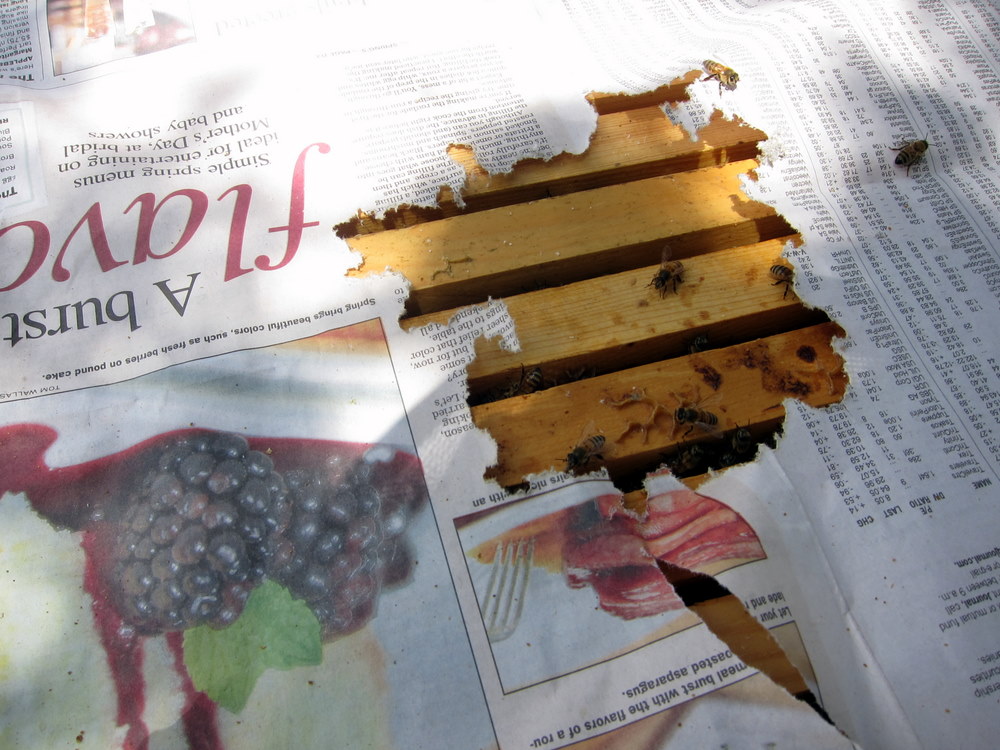
Albuquerque Journal, eaten by bees

10 May

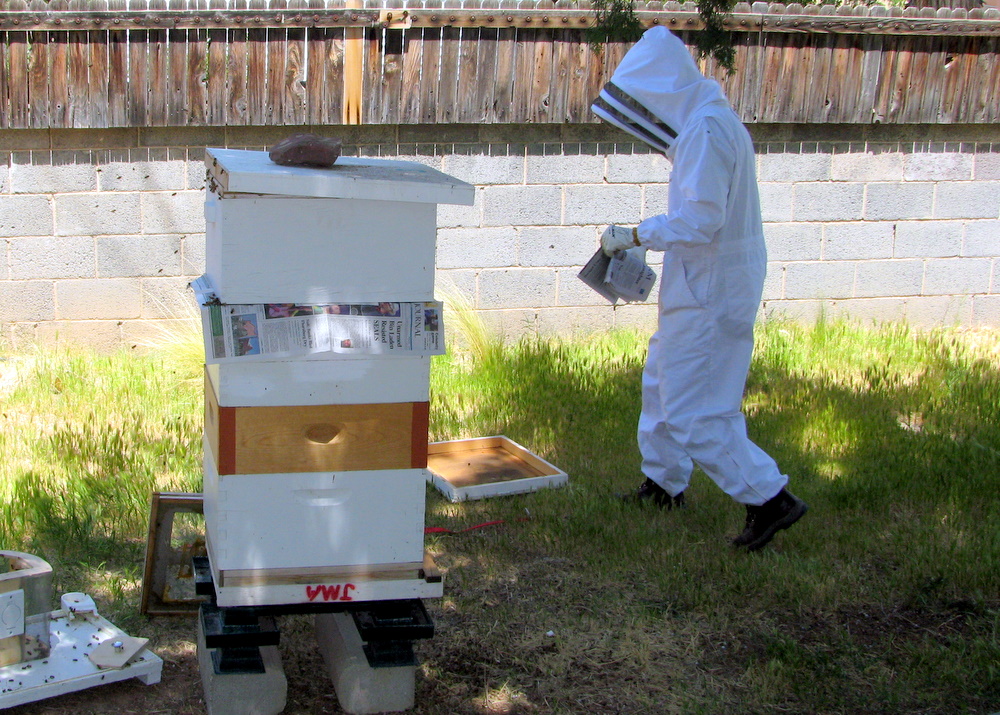
One way I like to bolster a hive throughout the season is to combine it with a small swarm or other weak hive. It’s the lazy girl’s guide to solving common problems like uniting a queenless hive with a queenright hive or combining a couple small swarms into one strong colony.

Day 1: Combine hives separated by 1 layer of newspaper

Day 1: Combine hives separated by 1 layer of newspaper

Day 3: Hives have chewed through the paper and combined, hopefully painlessly.

Day 3: Hives have chewed through the paper and combined, hopefully painlessly.

Newspaper Method of Combining Bees

  1. Take a small hive and remove the hive cover and inner cover.
  2. Place a piece or two of newspaper atop the frames in the top box. Cut a slit or two in the paper (optional).
  3. On top of this, add a box with your new colony or swarm.
  4. Close ‘er up and wait a couple days.
  5. OPTIONAL: Sometimes I leave a top entrance for the top box. Othertimes I don’t. Depends on the strength of that hive and how hot temperatures are projected to be.
Read other descriptions of the process at: